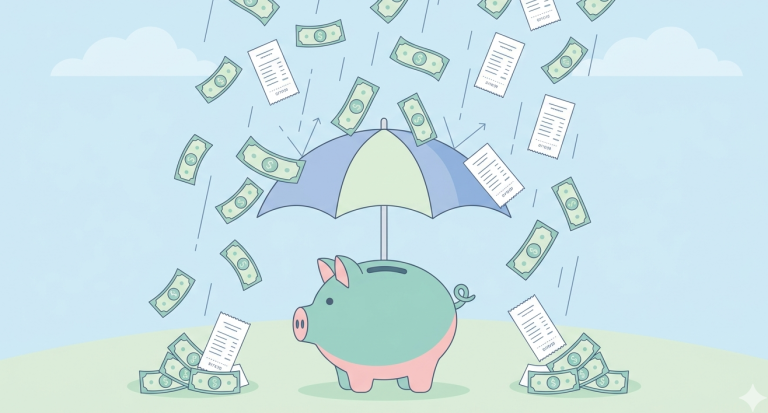

The Complete Debt Freedom Playbook: From Overwhelmed to Debt-Free
The Complete Debt Freedom Playbook: From Overwhelmed to Debt-Free
The average American household carries approximately $7,951 in credit card debt according to recent Federal Reserve data. When you add auto loans, student loans, and personal loans, the median household debt exceeds $50,000. If that feels overwhelming, you are not alone — and there is a clear path out.
This guide is a practical, step-by-step framework for eliminating debt. No shame, no quick fixes. These strategies are used by financial counselors, backed by behavioral economics research, and proven by thousands of people who reached debt freedom.
Know Exactly What You Owe
Most people in debt do not know their exact total. They carry a vague number — “around $15,000” or “too much.” This avoidance is understandable but harmful. You cannot build a payoff plan for a number you have not written down.
List every debt: credit cards, auto loans, student loans, personal loans, medical debt, money owed to family. For each, record the current balance, interest rate (APR), minimum monthly payment, and due date. This takes 30 minutes and a few login sessions.
Once complete, calculate your total debt and total monthly minimums. The gap between your income and your minimums is your “debt payoff capacity” — the extra money available to accelerate repayment. If that gap is zero or negative, the budget section below will help you find it.
Debt Snowball vs. Debt Avalanche
These are the two most proven debt repayment strategies. Both work. They differ in what they optimize for.
Debt Avalanche: Pay minimums on everything, then throw all extra money at the debt with the highest interest rate. When that is paid off, move to the next highest rate. This is mathematically optimal — it minimizes total interest paid and reduces the total repayment timeline. A $20,000 debt portfolio with rates ranging from 15-24% will cost approximately $2,000-$4,000 less in interest using the avalanche compared to the snowball.
Debt Snowball: Pay minimums on everything, then throw all extra money at the debt with the smallest balance, regardless of interest rate. When that is gone, move to the next smallest. This is psychologically optimal — eliminating a debt entirely creates a dopamine reward that reinforces the behavior. Research from the Harvard Business Review found that people using the snowball method were 14% more likely to successfully eliminate all debt compared to avalanche users.
The right answer depends on you. If you are disciplined and motivated by math, use the avalanche. If you need early wins to stay committed, use the snowball. If you are unsure, use the snowball — completion rate matters more than interest optimization if the alternative is giving up.
How to Negotiate Lower Interest Rates
This is one of the highest-return financial actions you can take, and most people never try it. A single phone call can save hundreds or thousands in interest.
The data supports this: a survey by CreditCards.com found that 76% of cardholders who asked for a lower rate received one. The average reduction was 5-6 percentage points. On a $10,000 balance, dropping from 22% to 16% saves approximately $600 per year in interest alone.
The script: Call the number on the back of your card. Say: “I have been a customer for [X years] and I have a good payment history. I have received offers from other cards at lower rates, and I would like to request a lower APR on my account.” Be polite, specific, and prepared to be transferred to a retention specialist. If the first person says no, ask to speak with a supervisor or call back another day — different representatives have different authorization levels.
Do this for every credit card you carry a balance on. The 20 minutes per call can yield more savings than hours of coupon clipping or expense tracking.
Building an Emergency Fund While in Debt
This feels counterintuitive — why save money when you owe money? — but it is one of the most important steps in the debt freedom process. Without a cash buffer, any unexpected expense (car repair, medical bill, home issue) forces you to borrow again, undoing months of progress.
The research is clear: a study published in the Journal of Consumer Affairs found that households with at least $500 in emergency savings were 40% less likely to experience financial hardship after an unexpected expense. The sweet spot for a starter emergency fund while in debt is $1,000-$2,000 — enough to cover most common emergencies without significantly delaying debt payoff.
Build this fund before aggressively attacking debt. Put minimum payments on all debts and direct every extra dollar to savings until you reach $1,000-$2,000. Once you have this buffer, redirect all extra money to debt payoff. After you are debt-free, expand the fund to 3-6 months of expenses.
Budgeting Methods That Stick
The best budget is one you actually follow. Here are the most effective methods, based on simplicity and adherence rates.
50/30/20 Rule: 50% of after-tax income to needs (housing, food, minimums), 30% to wants (entertainment, dining out), 20% to savings and extra debt payments. Simple, flexible, and easy to remember. Best for people who dislike detailed tracking.
Zero-Based Budgeting: Every dollar gets assigned a job before the month begins. Income minus all planned expenses equals zero. More detailed than 50/30/20 but provides tighter control. Best for people who want maximum debt payoff speed.
Envelope System: Withdraw cash for variable spending categories (groceries, entertainment, personal) and put it in physical envelopes. When an envelope is empty, spending in that category stops. Highly effective for controlling impulse spending — research shows that paying with cash reduces spending by 12-18% compared to cards.
Pay Yourself First: Automate debt payments and savings transfers immediately after payday. Live on what remains. This removes willpower from the equation entirely and is the most “set and forget” approach. Best combined with one of the methods above.
The Minimum Payment Trap
Minimum payments are designed to keep you in debt — not to get you out. They typically cover interest plus 1-2% of principal, which means the vast majority of each payment goes to interest rather than reducing your balance.
The math is sobering: a $5,000 credit card balance at 20% APR with a minimum payment of 2% ($100 initially, declining as the balance decreases) takes approximately 33 years to pay off. You would pay over $9,000 in interest — nearly double the original balance. The same $5,000 at a fixed $200/month takes 31 months and costs $1,047 in interest.
The key takeaway: even small increases above the minimum payment produce dramatic reductions in total cost and repayment time. Going from $100/month to $200/month on a $5,000 balance saves $8,000+ and 30 years. This is the highest-leverage financial move most people can make.
When Debt Consolidation Makes Sense
Debt consolidation means combining multiple debts into a single loan, ideally at a lower interest rate. It simplifies payments and can reduce total interest, but it is not always the right move.
Consolidation makes sense when: You can qualify for a rate significantly lower than your current weighted average (at least 3-5 points lower). You have multiple debts and struggle to manage multiple payments and due dates. Your total debt is manageable — consolidation works best for $5,000-$50,000 in unsecured debt. You are committed to not accumulating new debt on the cards you pay off.
Consolidation is risky when: You consolidate but continue using the original credit cards (this doubles your debt exposure). The consolidation loan has fees that offset the interest savings. You extend the repayment term significantly, paying less monthly but more total. You use a home equity loan or HELOC — this converts unsecured debt into debt secured by your home, which creates foreclosure risk.
Options include personal loans from banks or credit unions (typically 6-12% for good credit), balance transfer credit cards (0% APR for 12-21 months, then 15-25%), and nonprofit credit counseling agencies that negotiate reduced rates directly with creditors.
Your 90-Day Debt Freedom Action Plan
Here is a concrete timeline to launch your debt payoff journey.
Week 2: Call every credit card company and negotiate lower rates. Set up autopay for minimums on all accounts.
Week 3-4: Choose a budgeting method. Track spending for 2 weeks to identify where money is going. Find your “debt payoff capacity.”
Month 2: Build your $1,000 starter emergency fund. Direct all extra income here until you hit the target.
Month 3: Emergency fund in place. Choose snowball or avalanche. Begin aggressive debt payoff with all extra money directed to your target debt.
Ongoing: Review budget weekly (15 minutes). Renegotiate rates every 6 months. Celebrate each debt eliminated. Do not take on new debt.
Actionable Takeaways
- Write down every debt today. Balance, rate, minimum, due date. You cannot fix what you have not measured.
- Call your credit card companies this week. Ask for lower rates. 76% of people who ask, receive.
- Build a $1,000 emergency fund before attacking debt. This prevents the cycle of paying off and reborrowing.
- Pick snowball or avalanche and commit. Do not switch methods. Consistency beats optimization.
- Pay more than the minimum on at least one debt. Even $50 extra per month creates enormous long-term savings.
- Automate everything. Minimums on autopay, extra payments scheduled, savings transfers automatic. Remove willpower from the equation.
📘 Recommended: Debt-Free Resources
Top-rated books and planners for getting out of debt. Practical tools that work.
Marcus Chen is a Chartered Financial Analyst with 15 years of experience in asset management and personal finance education. He specializes in debt management strategies and long-term wealth building.
Last reviewed: March 2026
Financial Disclaimer: This content is for informational purposes only and does not constitute financial advice. Consult a qualified financial professional before making decisions about debt management or investing.